About H2Heat:

H2Heat is a Horizon Europe innovation project turning green hydrogen into reliable heat and oxygen for real-world users. Led by the Canary Islands Ocean Platform (PLOCAN), the project brings together eleven partners to design, build and demonstrate a complete green hydrogen value chain at a major hospital complex in the Canary Islands.
Mission
– Deliver >50% of hospital heat from hydrogen by 2030, aligning with the SCS Zero Net Emissions Health Strategy.
– Prove a replicable island model: 0.5 MW precious‑metal‑free electrolyser, first commercial 100% H2‑CHP, and smart EMS/DSM for multiple renewables.
– Build a full green hydrogen value chain in the Canary Islands that cuts emissions, lowers lifecycle heating costs and strengthens local skills and industry.
Ambition
– 2030 Zero Net Emissions alignment
– +50% hospital heat from green energy
– 0.5 MW electrolyser + 100% H2‑CHP
Where it happens
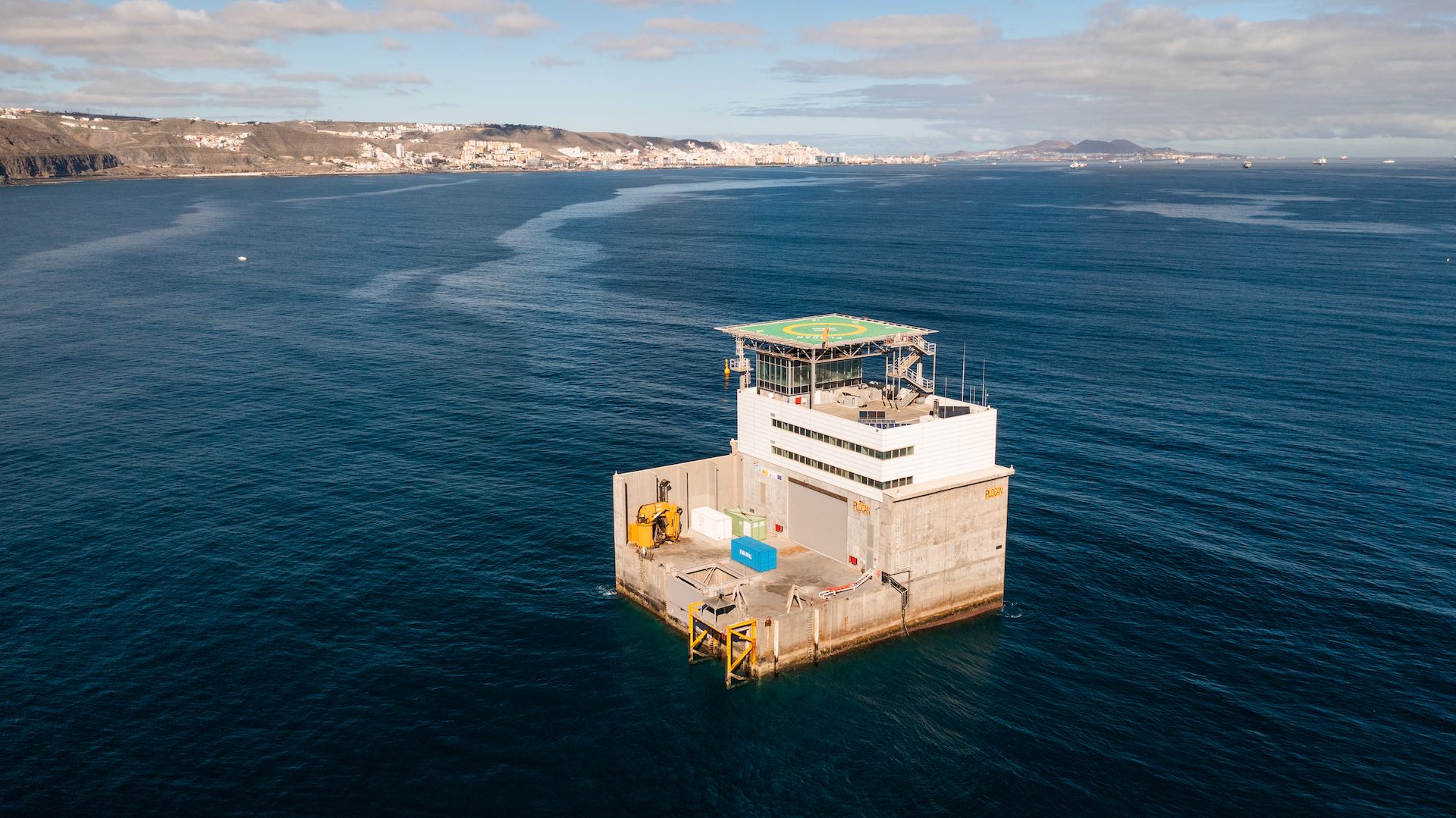
Hydrogen production will be located at PLOCAN’s nearshore research site in Gran Canaria, Spain, a strategic offshore testing ground in the Atlantic Ocean. This location provides direct access to open-ocean conditions while remaining close to shore, which reduces maintenance costs and increases operational efficiency. By situating the system nearshore, the project can meet performance targets in realistic marine conditions, including waves, currents, and salinity, while keeping logistics and intervention times manageable.
Consortium and Leadership
H2Heat is a Horizon Europe project led by PLOCAN, with a consortium of eleven partners including 2G Solutions, CMC, the Government of the Canary Islands and the SCS. International companies and research organisations also contribute, including Neodyne and ICoRSA from Ireland, Stargate Hydrogen from Estonia, SPLP from Ukraine, and EMEC from Great Britain.
The grant agreement with the European Commission, signed by PLOCAN as project coordinator, provides 10,655,475 euros of EU funding against a total budget of 13,062,375 euros over five years. ICoRSA leads Dissemination and Communication (WP7), while PLOCAN coordinates overall project management (WP6).









Impact and replication
H2Heat targets industrial heat supply where low‑temperature heat under 100 °C is in high demand. By combining H2‑CHP with heat pumps, the project delivers a highly efficient, low‑carbon heating solution that can be replicated in hospitals, campuses and industrial sites across Europe’s islands and coastal regions:
• Decarbonises low‑temperature industrial heat (<100 °C)
• Builds a full hydrogen supply chain
• Creates replicable commercial models for islands and coastal regions
• Strengthens local economy through skills and operations