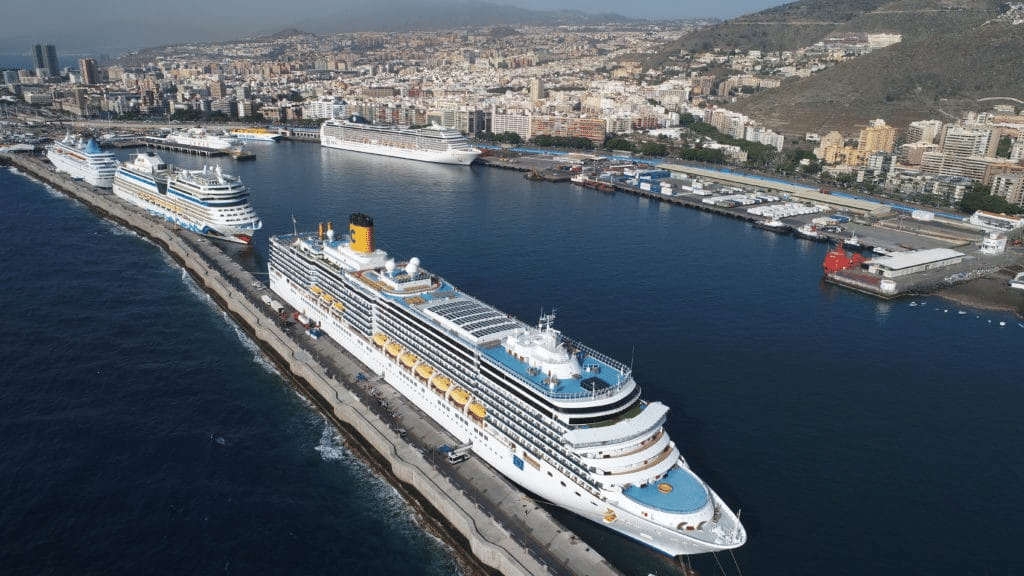
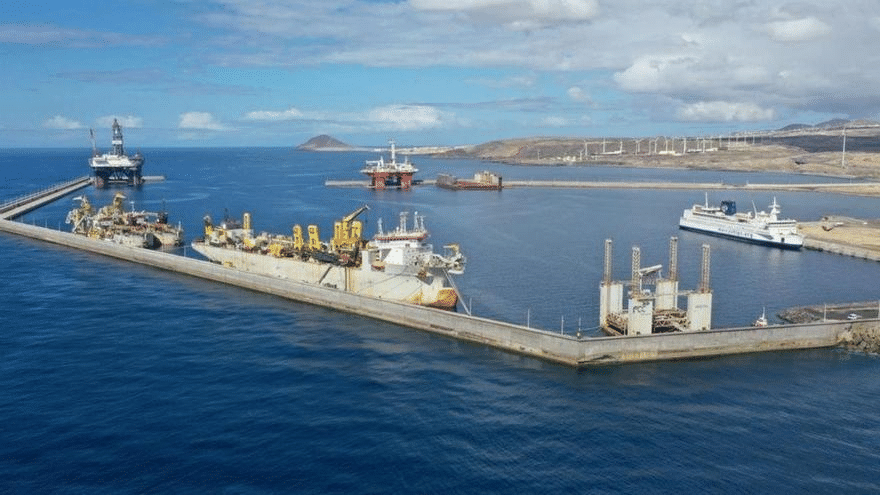
For more than a decade a parcel inside the Port of Granadilla, in southern Tenerife, was spoken for. It was going to host a regasification plant, a terminal to land liquefied natural gas and feed it into the island’s energy system. That application lapsed. On Thursday 5 November 2026 the board of Puertos de Tenerife agreed a new formulation of the port’s Special Plan, and it gives the same ground a much looser brief.
The uses now written in run from warehousing and logistics to bulk goods and energy infrastructure. In the authority’s own words, the options are tied to renewables, hydrogen, biofuels and synthetic fuels. Regasification is kept as a compatible use and fossil LNG appears as a possible transition energy, so this widens the options rather than swapping one fuel for another.
What the board actually decided
Less than the headlines suggest, and that matters. The board agreed the draft plan, dated September 2026, along with its initial strategic document, and asked for the strategic environmental assessment to begin. It did not approve the plan. Processing and final approval sit with the town council of Granadilla de Abona.
The plan splits the port into three areas. The first line keeps its existing provisions for roads and the coastal front. The second line reserves the large plots for industry and energy. A northern zone needs a separate plan of its own.
There’s a long paper trail behind this. The Special Plan was first formulated in 2014, with supporting documents in 2017. In April 2021 the Canary Government, through the town council, ruled that a fresh strategic environmental assessment was needed under regional planning law, and a change to the port’s designated spaces and uses followed in December 2021. Pedro Suarez, who chairs the authority, called Thursday’s agreement a necessary step towards a clear planning framework.
Why zoning is the quiet part of island energy
No company is named. No hectares, no investment figure, no build date. Anyone reading this as a hydrogen project announcement is reading it wrong.
What it does show is where island energy decisions get made. An island has no interconnector to dump a bad guess into, and space near a quay is finite. Deciding that a plot may host electrolysis or synthetic fuels, instead of only an LNG terminal, is a cheaper and far earlier decision than any of the kit that might eventually stand on it.
H2Heat is working the other end of that question, one island across. In Gran Canaria the project is building a green hydrogen chain into a hospital run by the Canary Islands Health Service: a 0.5 MW alkaline electrolyser from Stargate Hydrogen, a 100% hydrogen combined heat and power unit from 2G Solutions and an integrated heat pump, targeting around 372 kW of heat and 360 kW of power. That heat is low temperature, below 100 degrees C, which is the bulk of what a hospital actually needs.
Ports and plots are the supply side of island hydrogen. Anchor consumers like hospitals are the demand side, and we’ve written before about what an electrolyser of this size does to an island grid and about heat going missing from Europe’s hydrogen strategy. Tenerife has now given itself the option. Whether anyone takes it depends on whether there’s something at the other end worth supplying.