Let’s talk myths about hydrogen energy!
Hydrogen energy is surrounded by misconceptions that hold back its potential as a clean energy solution. These myths persist despite decades of safe industrial use and growing evidence of hydrogen’s viability. Let’s separate fact from fiction and explore why hydrogen deserves serious consideration in our energy future.

Myth 1: Hydrogen is Too Dangerous and Explosive
Perhaps no myth is more persistent than the idea that hydrogen is inherently dangerous. Many people still think of the Hindenburg disaster from 1937 when they hear about hydrogen. This fear, however, doesn’t match reality.
The truth is quite different. Hydrogen energy has been used safely in industries worldwide for over a century. Today’s technology makes it even safer than many conventional fuels we use daily. When properly handled with modern safety protocols, hydrogen poses comparable or even lower risks than petrol or natural gas.
Consider how hydrogen behaves compared to petrol. Hydrogen is 14 times lighter than air. This means it disperses rapidly upward when released, reducing the risk of ground-level ignition. Petrol, by contrast, is heavier than air. It pools on the ground, creating persistent fire hazards. This fundamental difference actually makes hydrogen safer in many scenarios.
Hydrogen also requires more oxygen to ignite than petrol. It needs specific conditions to explode. The flammable range is broader than petrol, yes, but the rapid dispersion in open spaces counteracts this. Modern detection systems can identify hydrogen leaks instantly, triggering automatic safety protocols.
There’s another advantage: hydrogen is non-toxic. Unlike petrol vapours, which contain carcinogens and pose serious health risks, hydrogen poses no health dangers from inhalation. When hydrogen burns, it produces only water vapour. Compare this to petrol combustion, which releases toxic substances harmful to human health.
Myth 2: Green Hydrogen is Too Expensive to Be Practical
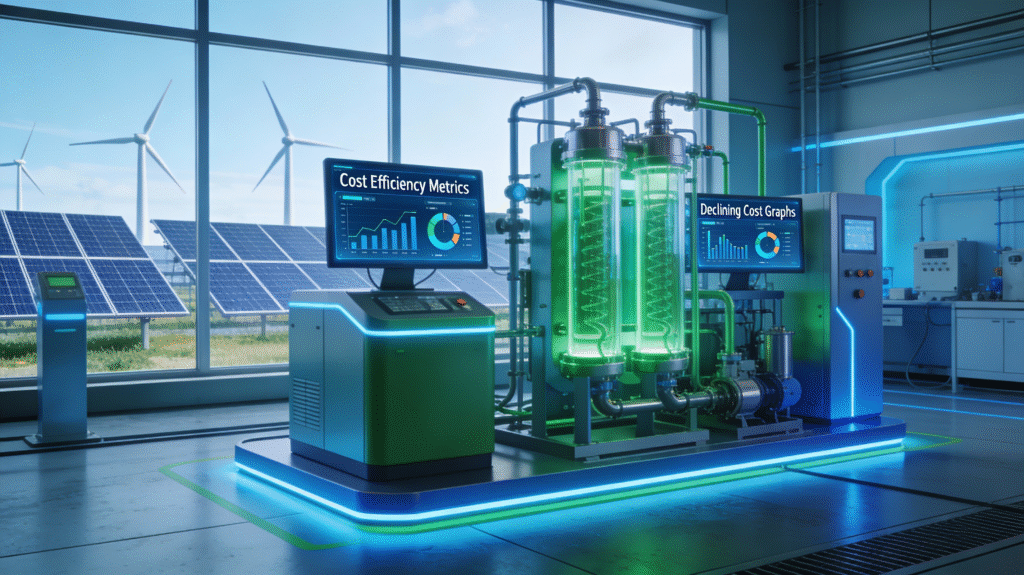
Cost concerns represent another major barrier to hydrogen acceptance. Currently, green hydrogen does cost more than fossil fuels. But this situation is changing rapidly, and the cost trajectory tells a compelling story.
Today’s (2025) green hydrogen production costs roughly £4.50 to £12 per kilogram, depending on location and technology. Grey hydrogen from natural gas costs significantly less at £0.98 to £2.93 per kilogram. This gap seems insurmountable. However, looking only at current prices misses the bigger picture.
The International Energy Agency projects that green hydrogen costs could fall by up to 60% by 2030. Several factors drive this dramatic cost reduction. Electrolyser technology continues improving, with innovations making production more efficient. The H2Heat project uses electrolyser technology from Stargate Hydrogen featuring novel ceramics-based electrode materials. These contain no precious metals, significantly lowering production costs whilst maintaining excellent efficiency.
Economies of scale play a crucial role too. As more projects come online, manufacturing costs decrease. China alone has established 125,000 tonnes per year of green hydrogen capacity by the end of 2024. Global production capacity continues expanding, with major projects like Spain’s Catalina Project planning a 500 MW electrolyser facility. This scale brings prices down.
Renewable energy costs are plummeting as well. Since electrolysis requires electricity to split water into hydrogen and oxygen, cheaper renewable power directly reduces hydrogen production costs. Solar and wind power have become the cheapest forms of electricity in many regions. This trend accelerates the cost competitiveness of green hydrogen.
Government incentives and carbon pricing mechanisms further level the playing field. When fossil fuel prices include the true cost of carbon emissions, the economics shift dramatically. Green hydrogen avoids these carbon costs entirely, making it increasingly attractive.
There’s another economic angle often overlooked. Green hydrogen enhances energy security. Nations can produce hydrogen domestically using their renewable resources. This reduces dependence on imported fossil fuels and exposure to volatile international energy markets. The economic value of this security is substantial, though difficult to quantify.
For islands like the Canaries, hydrogen offers particular economic benefits. They lack natural gas networks, making hydrogen essential for decarbonisation. Local production creates jobs, supports innovation, and keeps energy spending within the regional economy rather than sending it overseas for fuel imports.

Myth 3: Hydrogen Isn’t Really a Clean Energy Solution
Some critics argue that hydrogen simply shifts pollution elsewhere or that water vapour emissions create new environmental problems. This criticism deserves examination, but the evidence strongly supports hydrogen’s environmental credentials when produced correctly.
Green hydrogen production creates zero carbon emissions. The process uses electrolysis to split water molecules into hydrogen and oxygen using electricity from renewable sources like wind or solar. No fossil fuels enter this process. Therefore, it’s genuinely carbon-neutral. This contrasts sharply with grey hydrogen, which is produced from natural gas and releases substantial CO2.
Water vapour integrates into the existing hydrological cycle without accumulating over time.
When hydrogen burns or generates electricity through fuel cells, it produces only water vapour and heat. No carbon dioxide, no sulphur dioxide, no nitrogen oxides in most applications. This makes it dramatically cleaner than coal, oil, or natural gas combustion. For urban air quality, this difference is transformative. Switching to hydrogen-based energy could reduce respiratory diseases caused by fossil fuel pollution.
The water vapour question requires nuance. Yes, hydrogen combustion releases water vapour, which is a greenhouse gas. However, water vapour behaves very differently from CO2 in the atmosphere. It remains in the atmosphere for about nine days before precipitating out. CO2, by contrast, persists for centuries. Water vapour integrates into the existing hydrological cycle without accumulating over time.
Some concerns exist about high-altitude water vapour emissions from hydrogen-powered aircraft. These could affect cloud formation and stratospheric humidity. However, research suggests these localised effects are minor compared to the long-term climate damage from fossil fuel CO2 emissions. The trade-off remains overwhelmingly in hydrogen’s favour, especially for ground-based applications like heating and industrial processes.
The H2Heat project aims for a 50% reduction in carbon emissions at the hospital by project completion. This isn’t theoretical. It’s measurable impact replacing fossil fuel heating systems with genuinely clean energy. The comprehensive environmental impact assessments throughout the project monitor and verify these benefits.
Myth 4: Green Hydrogen Production Can’t Scale Up
Sceptics often claim that green hydrogen sounds good in theory but can’t reach the scale needed to make a real difference. Current production numbers seem tiny compared to global energy demand. Yet the scaling trajectory suggests otherwise.
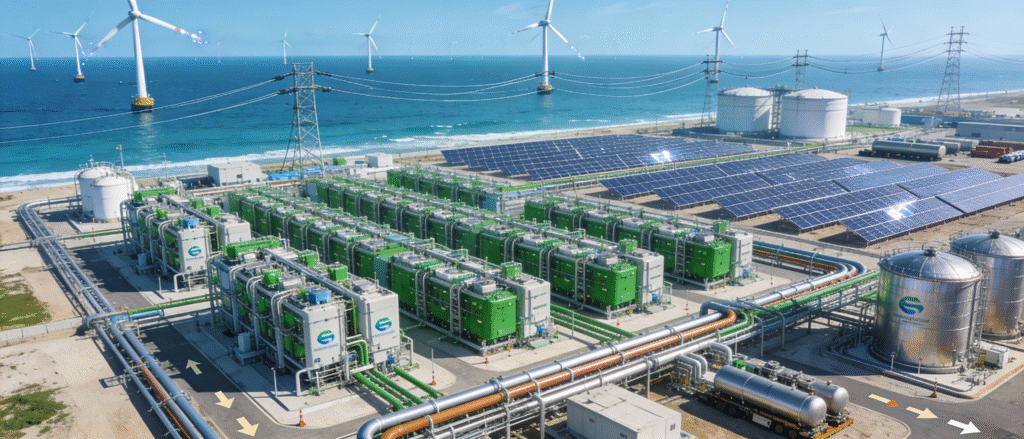
Global green hydrogen production reached approximately 1 million tonnes in 2024. This seems minuscule against 97 million tonnes of total hydrogen demand. However, this represents dramatic growth from just a few years ago. China leads with 125,000 tonnes per year capacity, exactly 50% of global green hydrogen production. The country added 48,000 tonnes of capacity in 2024 alone, representing 62% growth in a single year.
Major infrastructure projects worldwide demonstrate commitment to scaling up.
The technology for scale already exists. Industrial electrolysers can be modular, allowing capacity to grow incrementally without disrupting supply.
Storage and transport infrastructure are developing rapidly too. New storage technologies like solid-state hydrogen storage offer safe, modular systems supporting grid resilience. Pipeline infrastructure is being developed to connect production sites with industrial users. Some existing natural gas pipelines can be adapted for hydrogen transport with appropriate modifications.
The business case for scale is strengthening. Co-locating hydrogen production near heavy industry provides the initial critical mass needed. Hospitals, manufacturing facilities, and other large heat consumers offer anchor demand that justifies investment in production infrastructure. The H2Heat approach of demonstrating the full value chain from renewable generation through production to end use provides a replicable model.
The integration of hydrogen with existing renewable energy infrastructure accelerates scaling. Excess renewable energy that would otherwise be curtailed can instead produce hydrogen, effectively storing that energy for later use. This addresses the intermittency challenge of renewables whilst creating additional revenue streams that improve project economics.
Myth 5: Hydrogen Technology Isn’t Proven or Ready for Real-World Use
Perhaps the most damaging myth is that hydrogen remains experimental technology not ready for practical deployment. This perception ignores extensive real-world implementation and proven performance.
Hydrogen has powered industrial processes for decades. Chemical manufacturing, petroleum refining, and electronics production have long relied on hydrogen. The difference now is using renewable energy to produce it and expanding applications to sectors like heating, power generation, and transport.
The healthcare sector provides particularly demanding proof of readiness. Hospitals require absolute reliability for patient safety. Steam for sterilisation must meet exacting specifications with precise temperature and pressure. Backup power systems cannot fail. The fact that hydrogen systems are being deployed in this demanding environment demonstrates genuine technology maturity.
Moving Forward: From Myths to Reality
The evidence is clear. Hydrogen can be handled safely with proper protocols. Costs are falling rapidly toward competitiveness with fossil fuels. Green hydrogen is genuinely clean with only water vapour emissions. Production is scaling up with major infrastructure projects worldwide. And the technology is proven with operating systems delivering real results.
The transition to hydrogen requires continued investment, policy support, and public acceptance. Overcoming persistent myths is essential to building that acceptance. When people understand that hydrogen is safe, increasingly affordable, truly clean, scalable, and proven, resistance diminishes.
The climate crisis demands solutions that work at scale. Hydrogen offers one of the few viable paths to decarbonise heavy industry, long-distance transport, and heating systems that are difficult to electrify directly. Letting myths hold back this crucial technology would be a tragic missed opportunity.
The future energy system will be diverse, combining direct electrification with energy carriers like hydrogen for applications where electricity alone isn’t sufficient. Understanding hydrogen’s real benefits and manageable challenges allows us to deploy it strategically where it offers the greatest impact.
The time for dismissing hydrogen based on outdated assumptions has passed. The evidence points clearly toward hydrogen playing a vital role in the clean energy transition. With projects demonstrating feasibility, costs declining, and scale increasing, hydrogen is moving from promise to reality. The myths have been thoroughly debunked. Now it’s time to embrace the solution.
Sources
- Baltic Sea H2 Valley: Hydrogen Safety: Myths, Reality, and Future Prospects (2024)
- New Energy Coalition: Hydrogen Safety: From Risk to Readiness (2025)
- PowerUP Energy Technologies: Hydrogen Myths (2024)
- H2Electro: Myth – Hydrogen is Too Dangerous to Handle (2024)
- International Energy Agency: Green Hydrogen Cost Projections (2023)
- Bloomberg New Energy Finance: Green Hydrogen to Undercut Gray Sibling by End of Decade (2023)
- Nature Energy: The Green Hydrogen Ambition and Implementation Gap (2025)
- S&P Global Commodity Insights: China Green Hydrogen Production Capacity (2025)
- Black Ridge Research: Top 10 Green Hydrogen Projects in the World (2025)